At the Georgetown Chamber of Commerce and Industry's inaugural Youth Entrepreneurship Conference, I stood with primary and secondary school students from across Guyana and gave them the part of the story that is easy to avoid: nobody is promising them the job they are studying for.
AI is changing entry-level work quickly. In my own business, V75 Inc., it has absorbed much of the work that would have been done in entry-level roles just a year ago. That does not mean young people have no place in the economy. It means the terms have changed. The advantage now belongs to the person who can direct AI well enough to make, solve, build and deliver.
That is why I joined Avia Lindie, founder of Evolve Business Solutions Inc., for the AI-Augmented Entrepreneurship breakout session on Saturday, September 12. Our purpose was practical: help young people see AI as more than something they use. It is a tool they can use to develop ideas, solve problems, and build businesses of their own.
The opportunity in front of them
For too long, one of Guyana's most reliable exports has been our intellect. We raise bright young people, teach them, watch them excel, and then often watch them leave in search of the work and opportunity they could not find here.
AI can help change that calculation. It has collapsed both the cost of starting a company and, just as importantly, the cost of running one. Work that once needed a designer, developer, marketer and customer-support team can now be undertaken by one person who knows how to direct AI. The work still needs judgment, imagination and persistence. But the starting line has moved much closer.
For demonstration, I built and published an app in a single morning for under US$5 in AI tokens. A few years ago, that same work could have cost US$50,000 and taken a team eight months. That is not a novelty. It is a change in who can act.
The students were already moving
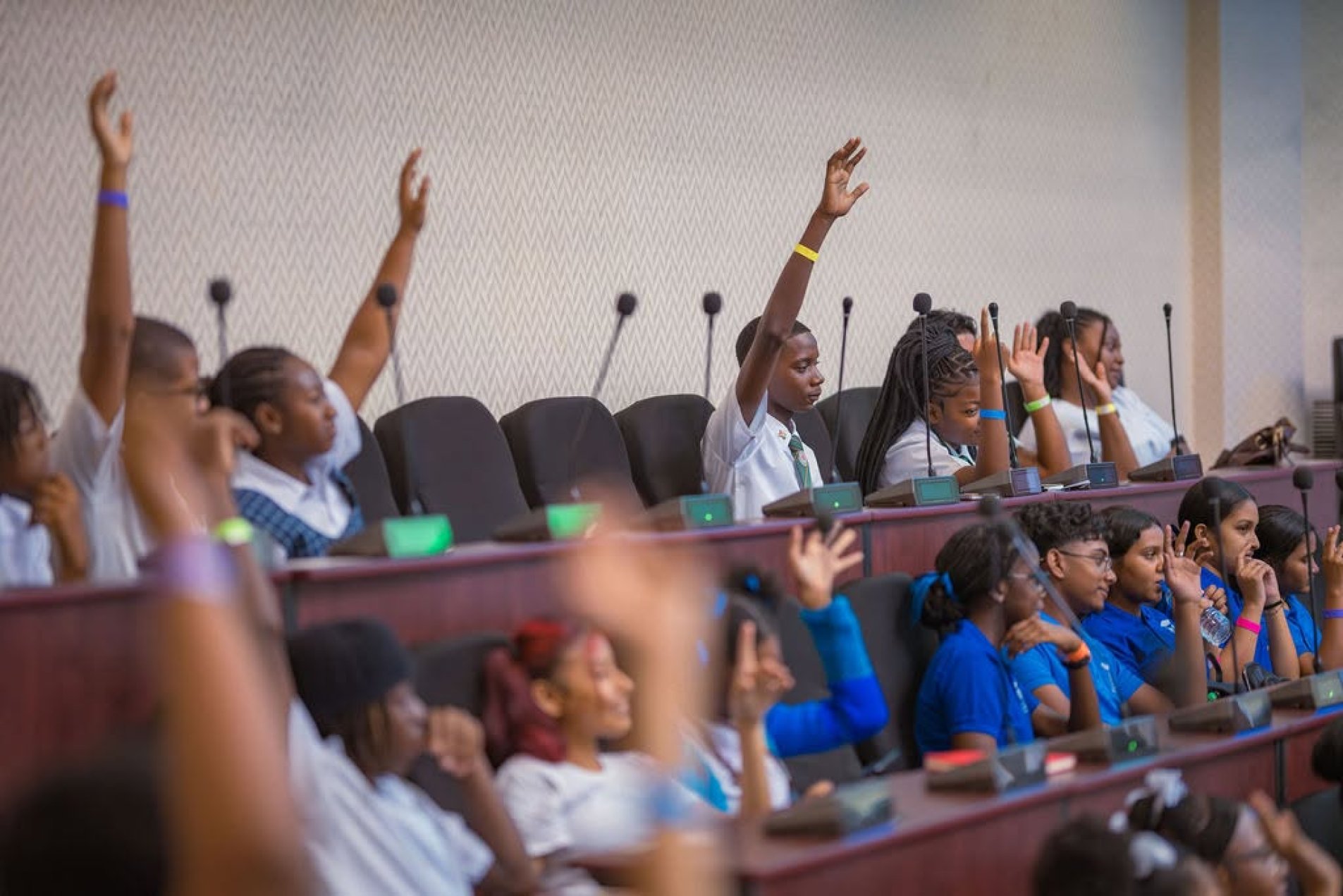
The most encouraging part of the session was the room itself. Some students were already experimenting with AI-assisted coding. One young builder was working on a solar-energy idea and asked the right question: how do I stop my code from falling apart as the project grows? These were young people between nine and seventeen, already making things and looking for the next level of support.
Avia brought the other essential perspective. She is not a programmer; she is an entrepreneur who applies AI across her operations to serve multiple Guyanese clients at scale. That is the point of AI-augmented entrepreneurship. The opportunity is not reserved for people who write code. It is open to people who can identify a problem, assemble the right tools and follow through.
From awareness to a platform
The young people lined up afterwards with real ideas and real questions about what to do next. That is where awareness has to become infrastructure. A young person who understands that they can create work stops waiting for somebody else to hand it to them. But that person still needs a path: guidance, tools, peers, markets and a place to keep building.
That is the case for a one-person company accelerator in Guyana. The one-person company is not a lesser ambition. For a fifteen-year-old with no capital and no team, it may be the most immediate form of control over an economic future that will keep shifting. We should give our young people a platform equal to that moment.
My thanks to the Georgetown Chamber of Commerce and Industry for putting entrepreneurship in front of young Guyanese at precisely the right time, and to every student who arrived ready to think beyond the job that may or may not be waiting for them.
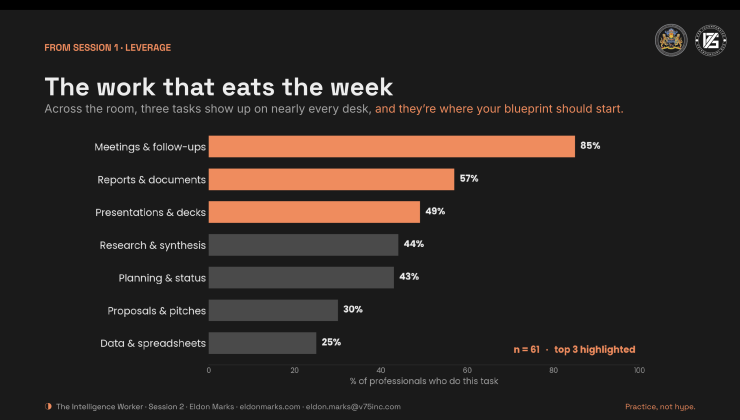
The GCCI's event recap includes the official session photographs and summary. The full presentation is also available.