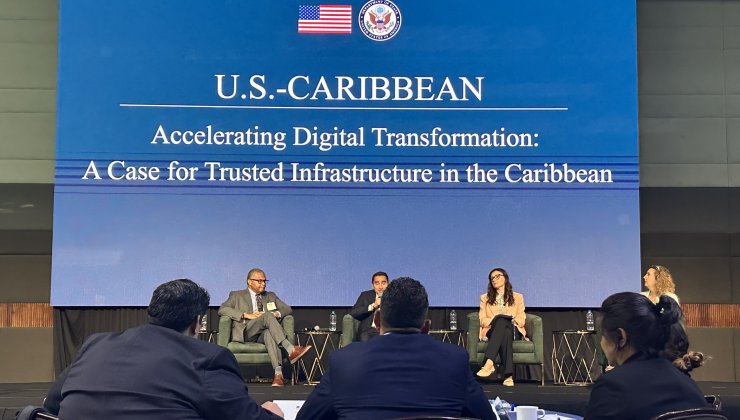
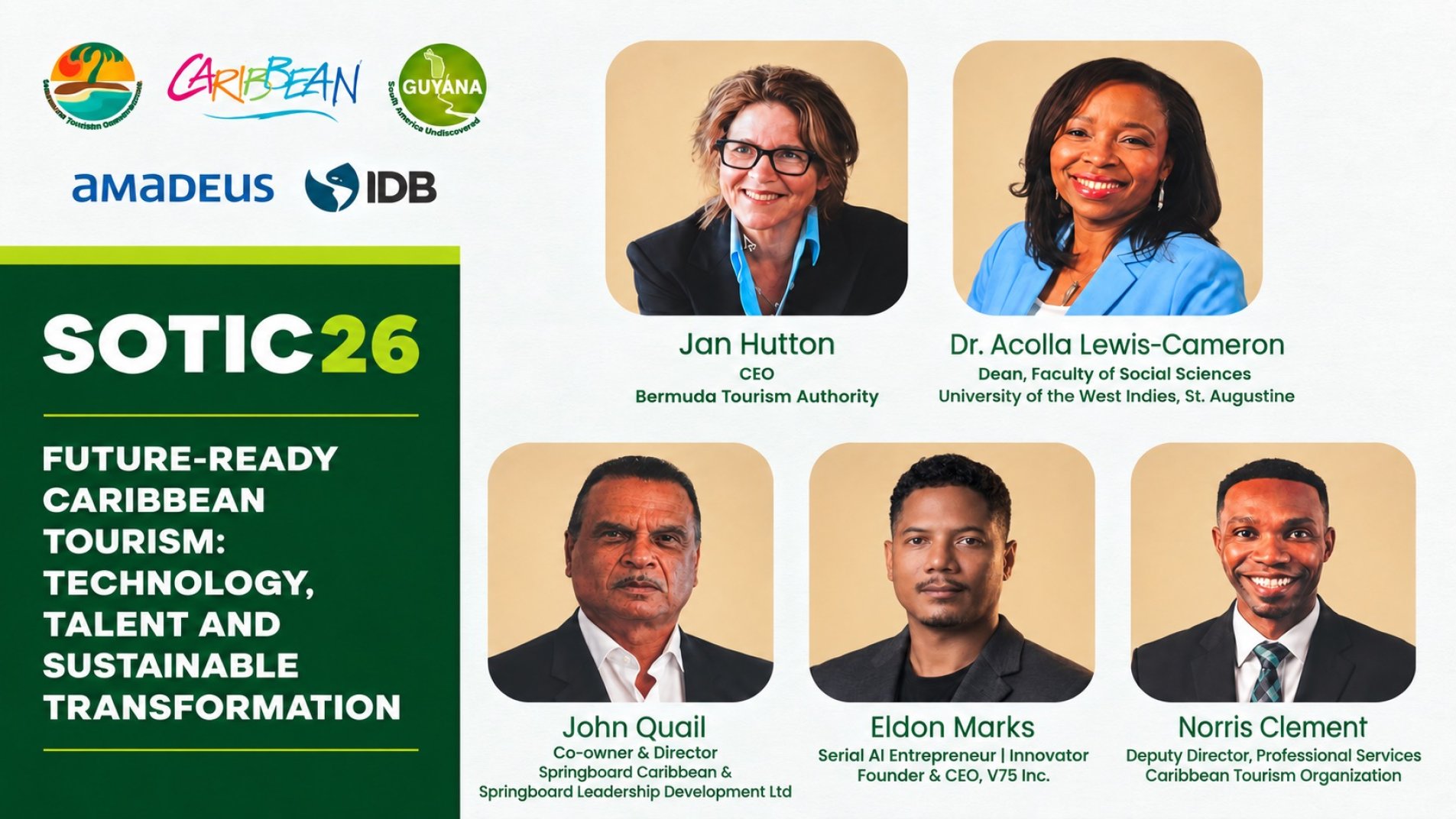
I had the privilege of joining the panel on “Future-Ready Caribbean Tourism: Technology, Talent and Sustainable Transformation” at SOTIC 2026 in Georgetown, Guyana. The moderator’s questions brought a broad discussion about technology down to practical concerns for Caribbean businesses and the people shaping the industry. Official programme
When asked about businesses adopting AI, I began with the outcome. We regularly hear from companies that want to “put AI into the business”. But what are they trying to achieve? Greater productivity, lower costs, wider reach or better customer service? We need to understand that first, then determine whether AI can help and where it belongs.
Jan Hutton brought that question into the traveller’s experience. AI is changing how people discover destinations before they ever reach a destination’s website. For tourism businesses, understanding where those decisions begin is part of understanding where the technology belongs.
Reflecting on that question, I think back to an IDB Lab-funded project we undertook around the emergence of generative AI. Our original plan involved AI, but was not built around this new technology. We had to regroup while executing the project, responding to real business needs while discovering what the tools could and could not do.
Customer service taught us some useful lessons. Repetitive questions and straightforward guidance were well suited to the technology. Unusual requests and complex transactions exposed gaps in reliability, including confidently incorrect answers. We had initially assumed AI could cover the full range. In other situations, removing the person diminished the customer’s experience. The human touch was part of what made the service valuable.
When the discussion turned to what businesses and destinations need to become future-ready, I spoke about the foundations: reliable energy and connectivity, digital identity and payments. Local businesses need that infrastructure to operate and participate in the digital economy.
Dr. Acolla Cameron emphasised capable people and connected systems that make everyday experiences easier for visitors and residents alike. Workforce readiness ran through the discussion. The technology needs people who understand how to apply it, and systems that work together.
I also made the case for investment and sustained support in our local technology ecosystems. Innovation centres can provide environments where practitioners have the tools, support and room to experiment alongside industry. Working against real problems helps them learn what AI can and cannot deliver, while giving businesses a practical hand in shaping useful solutions.
Reflecting on that discussion, I think back to a conversation in Punta Cana, where Dominican minister Eduardo Sanz Lovatón described a ministry programme connecting university tech talent with small businesses. Run through Dominican universities, its tech ambassadors worked alongside micro-entrepreneurs to teach practical AI tools. It echoed what we benefited from in our own AI enablement work: learning through direct engagement with business needs.
That connects with Dr. Cameron’s call for homegrown Caribbean solutions. Supporting our talent and bringing practitioners closer to industry helps us build the capacity to meet today’s needs and continue producing useful technology into the future. Investment in those relationships gives our local ecosystems the means to keep learning as the technology changes.
Looking back, this moment resembles the discovery of fire. We recognise something powerful, but excitement and uncertainty arrive together. We may wonder whether to fear it or wield it. Even when we choose to use it, understanding how takes experimentation.
That is why we need environments where young engineers and entrepreneurs can try, fail, learn and regroup alongside the people they hope to serve. Those opportunities help us develop local knowledge and give our talent meaningful reasons to stay and build here. They could also position the Caribbean to lead in areas where we understand the needs firsthand.
Finally, when asked what businesses could do to begin, my recommendation was to focus on AI literacy. Ask questions and speak with people who have experience implementing the technology. The opportunity is substantial, but learning to wield it starts with real needs and an honest understanding of what it can deliver.